Mold After a Leak in an Alpharetta House: The First Two Days Decide It
A house built in the 1990s is now on its third or fourth set of appliance hoses and possibly its third water heater. When one of them lets go, what happens in the next two days decides whether you have a drying job or a mold job.
To stop mold after a leak in Alpharetta, shut off the water, get standing water out and dry everything within 24 to 48 hours, the EPA's window. Drywall, insulation and carpet pad that stay wet longer usually grow mold and are removed. Fixr (2025) puts drying at $1,200–$5,000 and drying plus mold at $2,700–$10,000.
Where leaks start in Alpharetta houses of this age
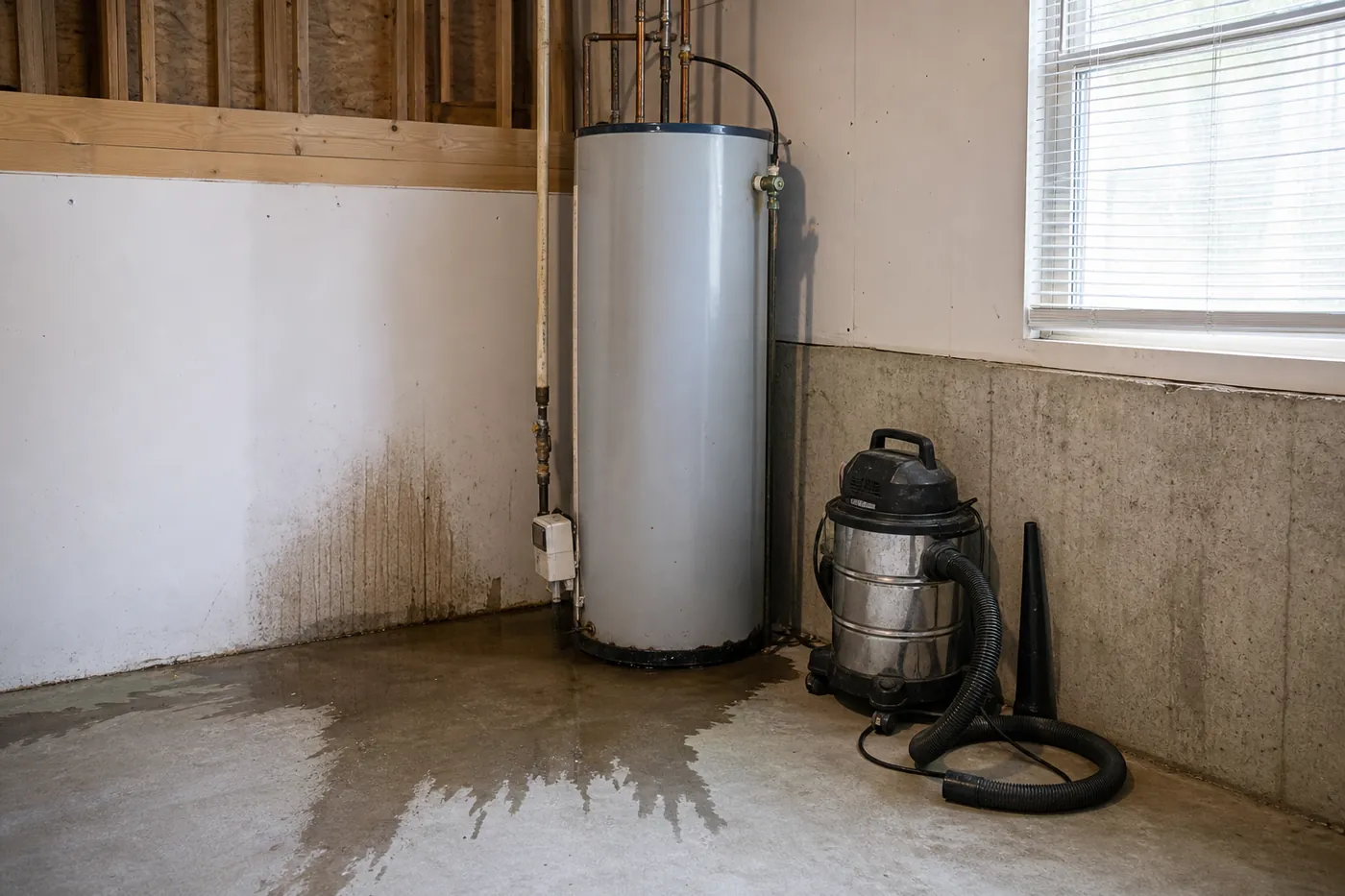
The 1990s produced more of Alpharetta's homes than any other decade, 9,081 of 26,223, and the median house was built in 1996 (U.S. Census ACS 2020–2024). At thirty-odd years, the usual suspects are the water heater tank or its relief line, braided supply lines to toilets and sinks, the ice maker line behind the refrigerator, washing machine hoses and the dishwasher connection. Upstairs bathrooms over finished ceilings are where a slow drip hides longest. Roof flashing and window seals of the same age let rain in at the top of walls.
The first 48 hours after a leak
- Stop the water at the fixture valve or the main shutoff, and turn off power to wet areas.
- Photograph everything before moving it, for the insurer.
- Get water out with a wet vacuum, and lift rugs and furniture off wet floors.
- Move air and remove moisture with fans and a dehumidifier, doors closed to the rest of the house.
- Check inside walls. A moisture meter shows whether drywall is drying; pulling baseboards lets walls breathe.
The EPA's guidance is to dry water-damaged areas and items within 24 to 48 hours to prevent mold growth.
What can be dried, and what comes out
Hard surfaces, framing, tile and most solid wood furniture can be cleaned and dried. Drywall that is still wet after two days, insulation, carpet pad and ceiling tiles usually cannot, and the EPA suggests porous materials with mold growth may need to be thrown away. A mold that has already started shows as dark spotting at the bottom of drywall, a musty smell, or paint that bubbles. At that point it is a removal job behind containment. Compare the published prices in the Alpharetta mold removal cost guide.
Insurance after a leak
Homeowners policies tend to treat a sudden, accidental discharge, such as a burst supply line, differently from a slow leak or ongoing humidity, and many limit what they pay for mold. Report the loss promptly, keep the failed part, and keep every receipt for drying equipment. Ask the adjuster in writing whether mold cleanup is covered under your policy before the work begins.
Questions homeowners ask
How fast does mold grow after a water heater leak?
Growth can begin within a day or two on wet drywall and carpet pad, which is why the EPA's drying window is 24 to 48 hours. A basement water heater that leaked over a weekend onto finished flooring is worth checking with a moisture meter even if it looks dry.
Tell the specialist what you found
Mention the room or level, whether it is a finished basement, and what got wet: a water heater, a supply line, rain at a wall, or nothing you know of. If you are buying or selling, say so. An independent mold specialist serving Alpharetta receives it and replies to you.