Basement Mold in Alpharetta: Hillside Walls, Humid Air and Finished Rooms
If your Alpharetta house has a basement, it is probably the first place to smell musty and the last place to dry out. It sits in cool earth, often with a hillside pressing on one wall, and it breathes the same humid summer air as the rest of the house.
Basement mold removal in Alpharetta starts by telling seepage from condensation: water coming through a wall needs drainage work, while humid air needs a dehumidifier. Moldy drywall, insulation and carpet pad are removed and the space dried. This Old House (2026) puts basement mold at $500–$3,000; Fixr (2025) at $1,500–$4,000.
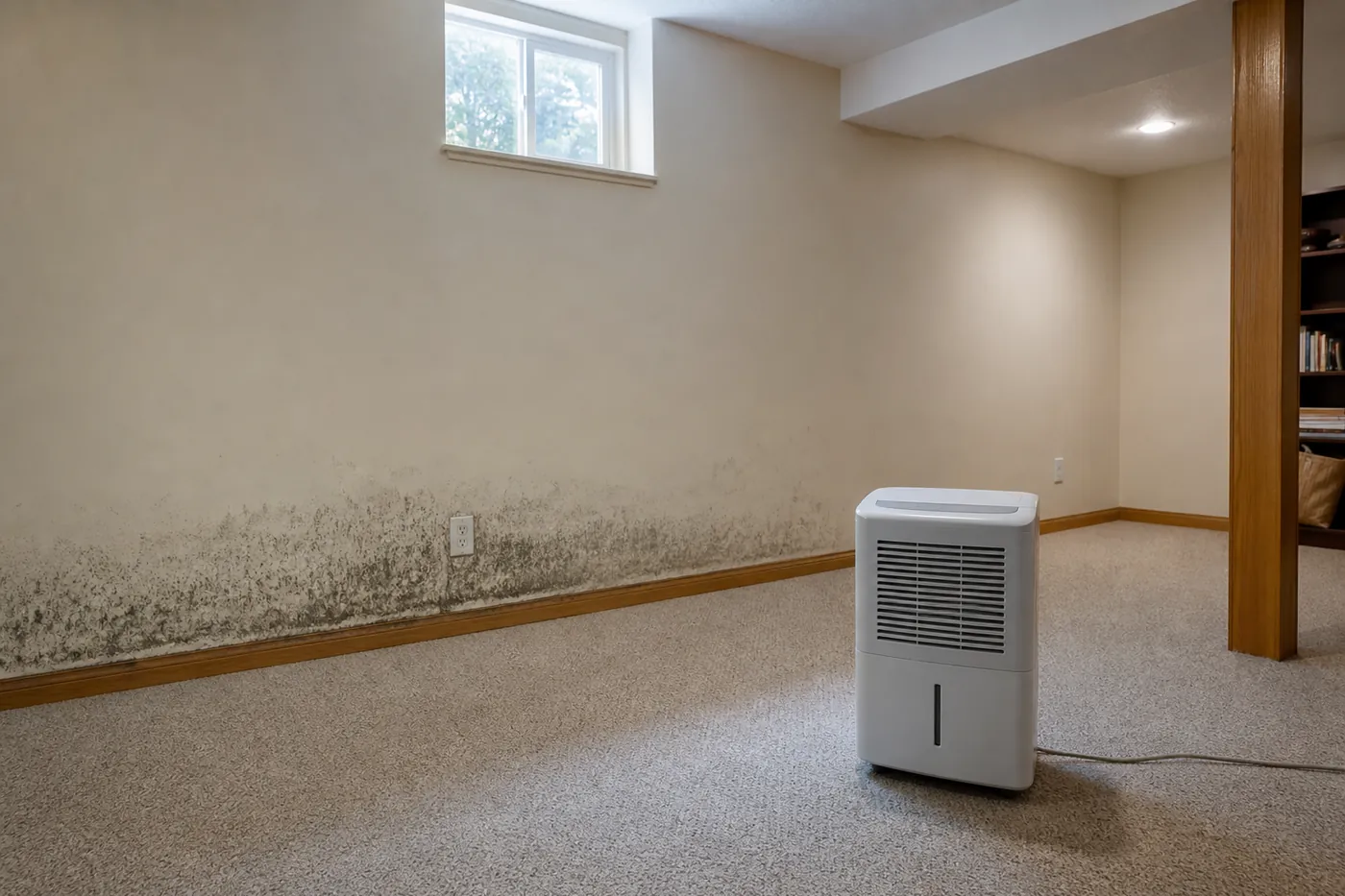
Seepage or condensation: which is it?
Tape a square of clear plastic, about a foot on each side, tightly to the bare basement wall or floor and leave it two days. Moisture under the plastic points to water coming through the concrete; moisture on top points to humid air condensing on a cool surface. In an Alpharetta summer, when outdoor dew points average about 68°F in July (NOAA hourly normals, Atlanta), condensation is common even in a basement that never leaks. Many houses have both.
Why basement mold in Alpharetta shows up on the uphill wall
Many Alpharetta lots slope, and federal soil maps show plenty of ground mapped at 10 percent or steeper (USDA NRCS). A basement cut into a slope has soil against the uphill wall and sometimes the side walls, while the downhill side opens to a door or windows. Rain soaking into the hillside reaches the uphill wall first. Look there for a damp strip along the floor, efflorescence on the block, swollen baseboards and mildew on the back of furniture pushed against it. Gutters that dump at the corners and soil that slopes toward the house make it worse.
Finished basements: what has to come out
- Drywall. Moldy drywall is cut out, usually well past the visible edge, since growth spreads on the back side first.
- Insulation. Fiberglass batts behind finished walls trap moisture against the concrete and are replaced.
- Carpet and pad. The EPA advises against carpet on concrete floors that leak or collect condensation; moldy pad rarely cleans.
- Framing. Wood studs with surface growth are usually cleaned and dried rather than replaced.
Before anything is rebuilt, the space should be dry and the source handled. Prices are in the Alpharetta mold removal cost guide.
Keeping a basement dry afterward
Hold relative humidity below 60 percent, the EPA's ceiling, with a dehumidifier that drains on its own; HomeGuide (2026) lists installed basement units at $1,100–$2,800. Extend downspouts, regrade soil away from the uphill wall, and keep stored boxes off the floor and away from exterior walls. If water is actually entering, that is drainage work, and the mold will return until it is done.
Questions homeowners ask
Should I run a dehumidifier in my Alpharetta basement all year?
Mostly from late spring to early fall, when dew points are high. In winter, Atlanta's average dew point falls to about 32°F in January (NOAA), so the basement usually dries without help. A unit with a humidistat set near 50 percent runs only when needed.
Tell the specialist what you found
Mention the room or level, whether it is a finished basement, and what got wet: a water heater, a supply line, rain at a wall, or nothing you know of. If you are buying or selling, say so. An independent mold specialist serving Alpharetta receives it and replies to you.