Reading Mold Signs Through an Alpharetta Year
The same house sends different signals in July and January. Go to the season you are in and the sign you noticed. Each answer is short, with a link to the fuller page.
Mold signs in Alpharetta homes follow the weather: musty basements and sweating ducts in the humid summer, wet window glass in winter, and ceiling or wall stains after heavy rain any time of year. Most trace to one moisture source. Under about 10 square feet, the EPA says a household can usually clean it once the source is fixed.
Summer: the basement smells musty though nothing leaked
That is usually condensation. July dew points near Atlanta average about 68°F (NOAA), and cool basement walls and floors collect moisture from that air, often under carpet. Run a dehumidifier to keep the room below 60 percent relative humidity, per the EPA, and check behind furniture on exterior walls. See basement mold.
Summer: dark specks around ceiling vents
Cold air leaving a register meets humid room air and condenses on the grille and the ceiling around it, and dust there feeds mildew. It points to high indoor humidity or a duct that sweats in the attic. Wipe the grilles, check the system's drip pan and condensate line, and have the duct insulation looked at. See mold inspection.
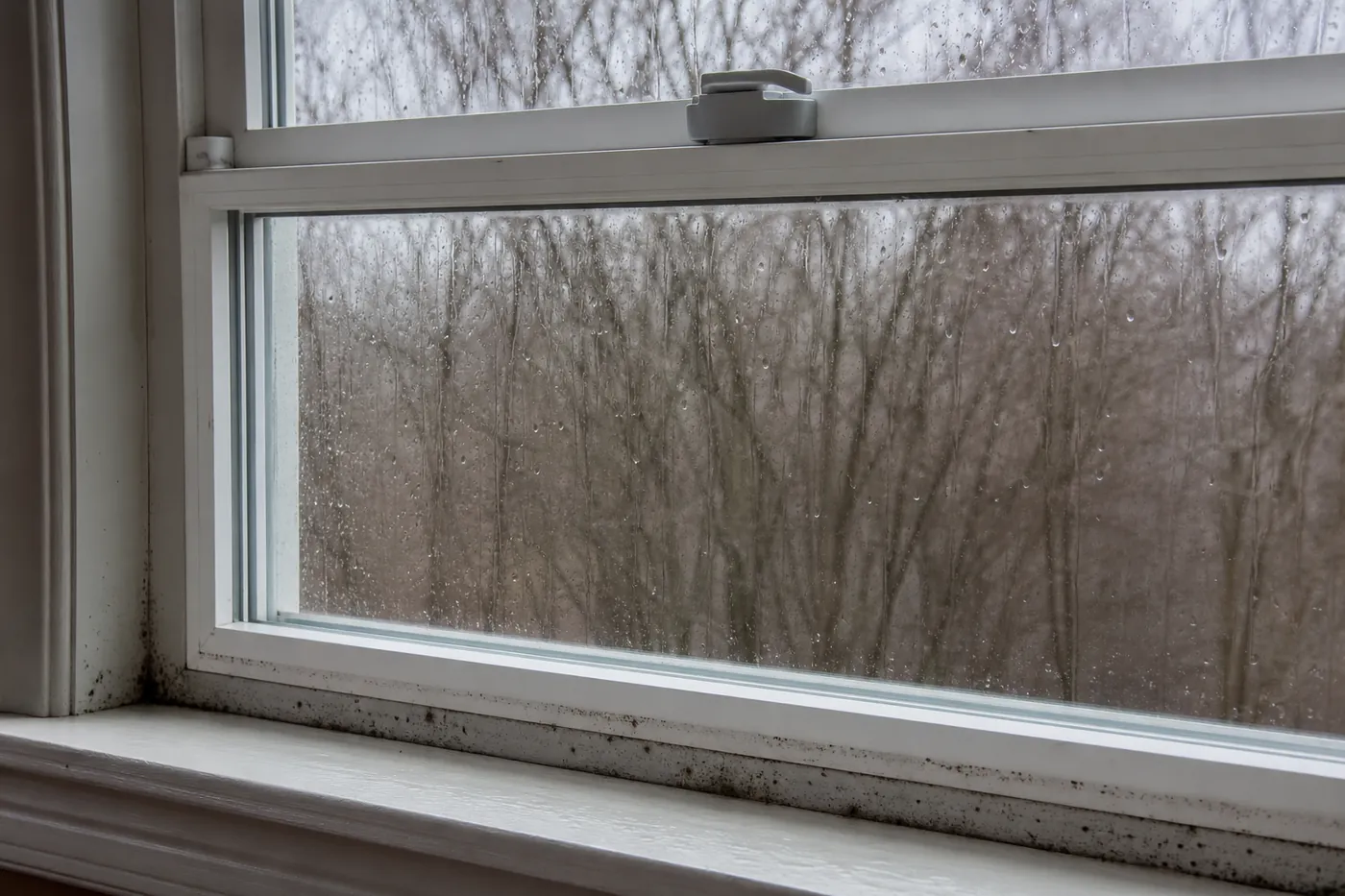
Winter: water runs down the inside of the windows
Cold glass meets warm indoor air carrying moisture from showers and cooking. The EPA calls condensation a sign of high humidity. Use bath and kitchen fans, crack a blind for air movement, and wipe the sills; black spots on wood sills or caulk are surface mold that cleans up. Persistent fogging between double panes is a failed seal, not mold.
Spring: a brown stain spreads on an upstairs ceiling
After a heavy rain it may be the roof or flashing; with dry weather it is more likely the bathroom above, a toilet seal or a tub drain. Atlanta Peachtree averages 51.4 inches of rain a year over 77 days (NOAA), so roof leaks show up across the calendar. Find the source before repainting. See mold after a leak.
Any season: baseboards swell near the water heater or laundry
Swollen trim and bubbling paint low on a wall mean water has been wicking up the drywall, usually from a slow appliance leak. Pull the baseboard and look at the back of the drywall; dark growth there means the wet section comes out. See mold after a leak.
Any season: someone in the house has stuffy, itchy symptoms at home
The CDC lists a stuffy nose, sore throat, cough or wheeze, burning eyes and skin rash among the reactions some people have to mold, while others notice none; asthma and mold allergy raise the odds of a severe one. A doctor should weigh in on symptoms. In the house, look for the water. See mold inspection.
Tell the specialist what you found
Mention the room or level, whether it is a finished basement, and what got wet: a water heater, a supply line, rain at a wall, or nothing you know of. If you are buying or selling, say so. An independent mold specialist serving Alpharetta receives it and replies to you.